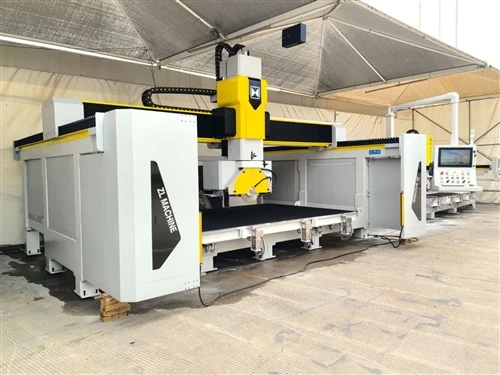
The cutting ability of a stone saw blade is a critical factor in the stone processing industry. Among the various factors that influence this ability, the blade diameter plays a significant and often underestimated role. As a seasoned stone saw blade supplier, I have witnessed firsthand how different blade diameters can impact the cutting performance in diverse stone - cutting applications. In this blog, I will delve into the relationship between blade diameter and the cutting ability of a stone saw blade.

Basic Principles of Stone Cutting with Saw Blades
Before discussing the impact of blade diameter, it's essential to understand the basic principles of how a stone saw blade cuts through stone. A stone saw blade consists of a metal core and diamond segments. The diamond segments are the cutting parts, and they work by grinding and abrading the stone material as the blade rotates. The cutting process generates heat, and proper cooling is required to prevent damage to the blade and ensure efficient cutting.
Influence of Blade Diameter on Cutting Depth
One of the most obvious ways the blade diameter affects the cutting ability is in determining the maximum cutting depth. A larger - diameter saw blade can cut deeper into the stone compared to a smaller - diameter one. For example, in a quarry where large blocks of stone need to be cut into slabs, a saw blade with a large diameter, say 1200mm or more, is often used. This allows for a significant cutting depth, enabling the production of thick slabs in a single pass.
Conversely, in applications where only shallow cuts are required, such as edge profiling or small - scale stone carving, a smaller - diameter blade, perhaps 100mm - 300mm, is more appropriate. The ability to choose the right blade diameter according to the required cutting depth is crucial for optimizing the cutting process. It not only affects the efficiency but also the quality of the cut. If a blade with a too - small diameter is used for a deep - cutting task, multiple passes may be required, which can lead to uneven cuts and increased processing time.
Impact on Cutting Speed
Blade diameter also has a direct impact on the cutting speed. Generally, a larger - diameter blade rotates at a lower peripheral speed for the same rotational speed (RPM) compared to a smaller - diameter blade. However, in many cases, larger - diameter blades can still achieve higher cutting speeds in practice. This is because they can cover a larger area with each rotation.
In high - volume stone processing operations, such as mass - producing granite countertops, a large - diameter saw blade can cut through the stone more quickly, reducing the overall processing time. On the other hand, in precision cutting operations where a slow and controlled cutting speed is necessary, a smaller - diameter blade may be preferred. The smaller blade allows for more precise control of the cutting process, reducing the risk of chipping or cracking the stone.
Effect on Cutting Force
The cutting force required to operate a saw blade is closely related to its diameter. A larger - diameter blade typically requires more power to rotate and cut through the stone. This is because the larger blade has a greater mass and a larger cutting area, which means more resistance from the stone. As a result, larger - diameter blades are usually used with more powerful sawing machines.
In some cases, the available power of the sawing equipment may limit the choice of blade diameter. If a machine does not have enough power to drive a large - diameter blade, the blade may not cut efficiently, and it could even cause damage to the blade or the machine. Therefore, when selecting a blade diameter, it is essential to consider the power capacity of the sawing equipment.
Influence on Blade Life
The blade diameter can also affect the lifespan of the stone saw blade. A larger - diameter blade has more diamond segments and a larger cutting area. This means that the wear is distributed over a larger surface area, potentially leading to a longer blade life. However, larger blades are also more expensive to manufacture and replace.
In contrast, a smaller - diameter blade may wear out more quickly because the wear is concentrated on a smaller area. But they are generally more cost - effective for short - term or small - scale projects. For long - term and high - volume cutting operations, investing in a high - quality, large - diameter blade may be more economical in the long run, despite the higher initial cost.
Application - Specific Considerations
Different types of stone also require different blade diameters for optimal cutting. For instance, when cutting quartz, a hard and abrasive stone, a blade with an appropriate diameter is crucial. A Quartz Saw Blade with a suitable diameter can ensure efficient cutting without excessive wear. The hardness of quartz means that a larger - diameter blade may be more suitable for large - scale cutting operations to maintain cutting efficiency.
Sintered Saw Blades are often used for cutting various types of stone, including marble. When cutting marble, a softer stone compared to quartz, a smaller - diameter blade may be sufficient for many applications, especially for detailed work. However, for large - scale marble slab production, a larger - diameter blade can increase productivity.
Marble Saw Blades need to be selected carefully according to the specific requirements of the marble - cutting project. The diameter of the blade should be chosen based on factors such as the size of the marble blocks, the required cutting depth, and the desired cutting speed.
Conclusion
In conclusion, the blade diameter has a profound impact on the cutting ability of a stone saw blade. It affects the cutting depth, speed, force, blade life, and is also closely related to the type of stone being cut. As a stone saw blade supplier, I understand the importance of providing our customers with the right blade diameter for their specific applications.
If you are in the stone processing industry and are looking for high - quality stone saw blades, we are here to help. We offer a wide range of saw blades with different diameters to meet your diverse needs. Whether you are cutting quartz, marble, or other types of stone, we can provide the optimal solution. Contact us to discuss your requirements and start a procurement negotiation. We are committed to providing you with the best products and services to enhance your stone - cutting operations.
References
- “Stone Cutting Technology Handbook,” Industry - specific publication on stone processing techniques.
- “Diamond Tools in Stone Cutting,” Research paper on the performance of diamond - tipped saw blades.
- “Advances in Stone Saw Blade Design,” Journal article discussing the impact of blade design factors on cutting ability.