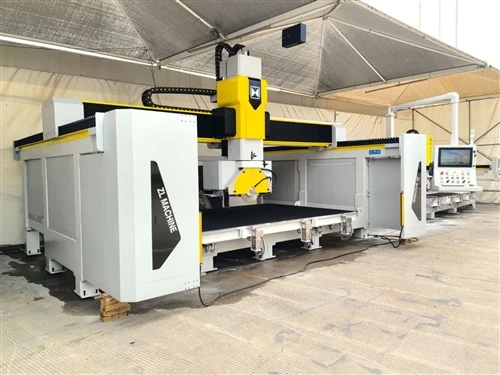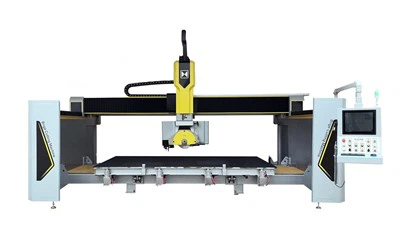
Hey there! As a supplier of CNC Bridge Saws, I often get asked if these machines can be used in a small workshop. Well, let's dive right into it and explore this question in detail.
Understanding CNC Bridge Saws
First off, what exactly is a CNC Bridge Saw? It's a powerful and precise cutting tool used in the stone, tile, and glass industries. The "CNC" stands for Computer Numerical Control, which means the saw is controlled by a computer program. This allows for highly accurate cuts and the ability to create complex shapes.


The bridge part of the saw refers to its structure. It has a bridge-like frame that spans over the cutting area. The saw blade is mounted on a carriage that moves along the bridge, and the material being cut is placed on a table below. This design provides stability and support during the cutting process.
Advantages of Using a CNC Bridge Saw in a Small Workshop
There are several reasons why a small workshop might benefit from having a CNC Bridge Saw.
Precision and Accuracy
One of the biggest advantages of a CNC Bridge Saw is its precision. With computer control, you can achieve cuts with extremely high accuracy, down to a fraction of a millimeter. This is crucial for creating high-quality products, especially in industries like stone fabrication where precision is key.
Efficiency
CNC Bridge Saws are also very efficient. They can cut through materials quickly and with minimal waste. This means you can produce more products in less time, which is great for a small workshop looking to increase productivity.
Versatility
These saws are incredibly versatile. They can cut a wide range of materials, including granite, marble, quartz, and ceramic tiles. They can also perform different types of cuts, such as straight cuts, miter cuts, and bevel cuts. This versatility allows you to take on a variety of projects, expanding your business opportunities.
Automation
The automation feature of CNC Bridge Saws is a game-changer. Once you've programmed the saw, it can operate on its own for long periods of time. This frees up your time to focus on other aspects of your business, such as design, sales, or customer service.
Challenges of Using a CNC Bridge Saw in a Small Workshop
However, there are also some challenges that come with using a CNC Bridge Saw in a small workshop.
Space Requirements
CNC Bridge Saws are relatively large machines. They need a significant amount of space in the workshop to operate safely and efficiently. This can be a problem for small workshops with limited floor space.
Cost
These machines are not cheap. The initial investment in a CNC Bridge Saw can be quite high, especially for a small business. In addition to the purchase price, there are also costs associated with installation, training, and maintenance.
Technical Expertise
Operating a CNC Bridge Saw requires a certain level of technical expertise. You need to be able to program the machine, troubleshoot any issues that arise, and perform regular maintenance. If you don't have the necessary skills in-house, you may need to hire a technician or send your staff for training, which can add to the cost.
Overcoming the Challenges
Despite the challenges, there are ways to make a CNC Bridge Saw work in a small workshop.
Space Management
If space is an issue, you can look for a compact or portable CNC Bridge Saw. These models are designed to take up less space while still providing the same functionality. You can also optimize your workshop layout to make the most of the available space.
Cost Considerations
To reduce the cost of purchasing a CNC Bridge Saw, you can consider buying a used machine or leasing one. There are also financing options available that can help you spread out the cost over time. Additionally, look for a saw that offers good value for money in terms of its features and performance.
Training and Support
Many CNC Bridge Saw suppliers offer training and support services to help you get started. Make sure to choose a supplier that provides comprehensive training and ongoing support. You can also invest in online courses or training materials to upskill your staff.
Types of CNC Bridge Saws for Small Workshops
When choosing a CNC Bridge Saw for a small workshop, it's important to consider the specific needs of your business. Here are some types of CNC Bridge Saws that are suitable for small workshops.
3 Axis CNC Bridge Saw
A 3 Axis CNC Bridge Saw is a popular choice for small workshops. It allows for movement in three directions (X, Y, and Z), which is sufficient for most basic cutting tasks. It's relatively affordable and easier to operate compared to more complex models.
4 Axis CNC Bridge Saw
If you need to perform more complex cuts, such as bevel cuts at different angles, a 4 Axis CNC Bridge Saw might be a better option. It adds an additional rotational axis, giving you more flexibility in your cutting operations.
Making the Decision
So, can a CNC Bridge Saw be used in a small workshop? The answer is yes, but it depends on your specific circumstances. If you have the space, the budget, and the technical expertise, a CNC Bridge Saw can be a valuable asset to your small workshop.
Before making a decision, it's important to do your research and consider all the factors. Look at different models, compare prices, and read reviews from other users. You may also want to visit a showroom or a demonstration to see the saw in action.
If you're interested in purchasing a CNC Bridge Saw for your small workshop, we have a great selection of Cnc Bridge Saw For Sale. Our team of experts can help you choose the right model for your needs and provide you with all the support you need to get started. Don't hesitate to get in touch with us to discuss your requirements and start a procurement conversation.
References
- Industry reports on stone and tile fabrication
- Manufacturer's specifications and brochures for CNC Bridge Saws