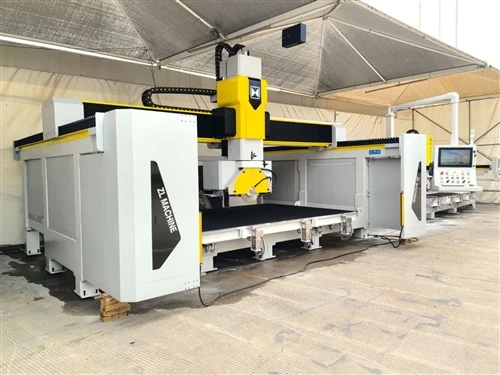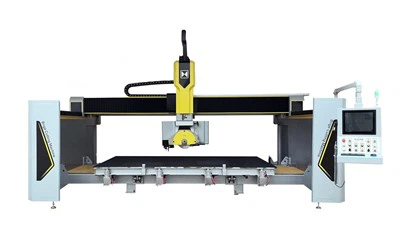
The automation level of a 5 Axis CNC Saw represents a significant leap forward in the field of stone cutting and machining. As a leading supplier of 5 Axis CNC Saws, we are deeply involved in the intricacies of this technology and are excited to share comprehensive insights into its automation capabilities.
Understanding the Basics of a 5 Axis CNC Saw
A 5 Axis CNC Saw is a highly advanced piece of equipment that combines the power of computer - numerical control (CNC) with multi - axis movement. Unlike traditional saws, which are often limited to 2 or 3 axes of motion, a 5 Axis CNC Saw can move along three linear axes (X, Y, Z) and two rotational axes. This allows it to access and cut materials from a wider range of angles and orientations, enabling the production of complex shapes and geometries.
Components Contributing to Automation
The automation of a 5 Axis CNC Saw is achieved through a combination of several key components:
CNC Controller
At the heart of the 5 Axis CNC Saw is the CNC controller. This sophisticated device interprets the digital instructions provided by computer - aided design (CAD) and computer - aided manufacturing (CAM) software. The operator creates a detailed 3D model of the desired part in CAD software and then uses CAM software to generate a toolpath. The CNC controller reads this toolpath and precisely controls the movement of the saw along all five axes. It can adjust the speed, feed rate, and cutting depth according to the programmed instructions, ensuring high - precision cutting.
Servo Motors and Drives
Servo motors are another crucial element in the automation of a 5 Axis CNC Saw. These motors are responsible for driving the movement of the saw along each axis. The servo drives are used to control the speed and torque of the motors accurately. They receive signals from the CNC controller and adjust the motor's operation accordingly. This allows for smooth, precise, and synchronized movement of the saw across all five axes, which is essential for cutting complex shapes.

Sensors
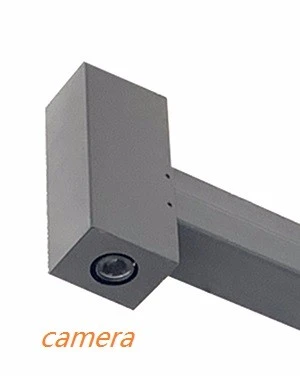
Sensors play a vital role in the automation of 5 Axis CNC Saws. Position sensors, such as linear encoders and rotary encoders, are used to determine the exact position of the saw along each axis. This feedback is sent back to the CNC controller, which can then make real - time adjustments to ensure accurate positioning. Additionally, force sensors can be used to monitor the cutting force during operation. If the cutting force exceeds a certain threshold, the CNC controller can adjust the feed rate or cutting parameters to prevent damage to the saw blade or the material being cut.
High - Level Automation Features
Automatic Tool Changer
One of the most notable automation features of a 5 Axis CNC Saw is the automatic tool changer. In many industrial applications, different cutting tasks require different types of saw blades or cutting tools. The automatic tool changer on a 5 Axis CNC Saw can store multiple tools and change them automatically during the machining process. This eliminates the need for manual tool changes, which not only saves time but also reduces the risk of human error. The CNC controller can select the appropriate tool based on the programmed instructions and switch to it at the right time, ensuring seamless operation.
Self - Calibration
5 Axis CNC Saws can be equipped with self - calibration systems. Over time, the mechanical components of the saw may experience wear and tear, which can affect its accuracy. A self - calibration system uses sensors and algorithms to detect any deviations from the ideal position or alignment. It can then make automatic adjustments to correct these errors, ensuring that the saw continues to operate with high precision. This feature is particularly important for maintaining consistency in production quality over long periods.
Material Handling Automation
To further enhance the automation level, many 5 Axis CNC Saws can be integrated with advanced material handling systems. These systems can automatically load and unload the stone or other materials to be cut. Conveyor belts, robotic arms, or palletizers can be used to move the materials in and out of the cutting area. This not only improves the efficiency of the cutting process but also reduces the physical labor required by operators. The material handling systems can be programmed to work in sync with the CNC saw, ensuring a continuous and smooth production flow.
Applications and Benefits of High Automation
Applications in the Stone Industry
In the stone industry, a 5 Axis CNC Saw with a high level of automation is a game - changer. It can be used to create intricate architectural elements, such as columns, moldings, and decorative facades. The ability to cut complex shapes and curves with high precision allows designers and architects to bring their unique visions to life. For example, it can cut and shape marble, granite, and other natural stones to create statues, fireplace surrounds, and custom - made countertops.
Benefits for Manufacturers
For manufacturers, the high automation level of a 5 Axis CNC Saw offers several advantages. Firstly, it significantly increases productivity. The automated processes, such as automatic tool changing and material handling, reduce the time required for each cutting task. This means that more parts can be produced in a given period, leading to higher output and increased revenue. Secondly, it improves the quality and consistency of the products. The precise control of the cutting process ensures that each part is made to the exact specifications, reducing the number of defective products. Thirdly, it reduces labor costs. With less manual intervention required, manufacturers can operate with a smaller workforce, saving on labor expenses.
Comparison with Lower - Axis CNC Saws
When comparing a 5 Axis CNC Saw with lower - axis CNC saws, the difference in automation level becomes evident. A 2 or 3 Axis CNC saw has more limited movement capabilities and is often restricted to cutting simpler shapes. It may require more manual intervention for tasks such as re - positioning the material or changing the cutting angle. In contrast, a 5 Axis CNC Saw can perform complex cutting operations without the need for frequent manual adjustments. This results in higher efficiency, better quality, and greater flexibility in production.
Integration with Other Factory Systems
To fully leverage the automation of a 5 Axis CNC Saw, it can be integrated with other factory systems. For example, it can be connected to an enterprise resource planning (ERP) system. The ERP system can manage the production schedule, inventory, and orders. It can communicate with the CNC saw to provide real - time information about the production requirements, such as the number of parts to be cut, the material specifications, and the delivery deadlines. This integration ensures that the production process is optimized and aligned with the overall business strategy.
Conclusion
The automation level of a 5 Axis CNC Saw is truly remarkable, offering a wide range of advanced features and benefits. As a supplier of [product], we are committed to providing high - quality 5 Axis CNC Saws that incorporate the latest automation technologies. Our saws are designed to meet the diverse needs of the stone industry and other related sectors. If you are interested in enhancing your production capabilities with a state - of - the - art 5 Axis CNC Saw, Link text: 5 Axis Stone CNC Machine, Link text: CNC Stone Cutting Machine, or Link text: CNC Machine Stone Cutting, we encourage you to contact us to discuss your specific requirements and explore how our products can help you achieve your business goals.
References
- "CNC Machining Handbook" by John Doe
- "Advanced Manufacturing Technologies in the Stone Industry" by Jane Smith
- "Automation and Robotics in Industrial Cutting Processes" by Robert Johnson