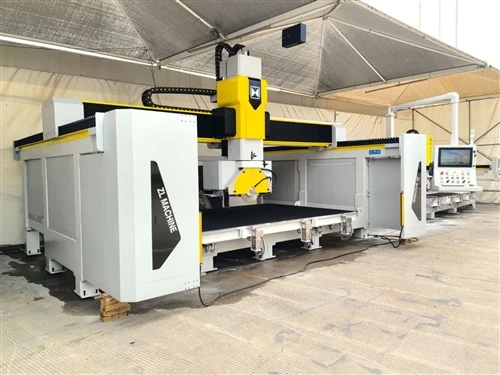
As a supplier of CNC stone machines, I've witnessed firsthand the profound impact of the environment on the performance of these sophisticated pieces of equipment. CNC stone machines, such as the Stone CNC Center, Bridge Stone Cutting Machine, and 5 Axis CNC Stone Cutting Machine, are engineered to deliver precision and efficiency in stone processing. However, their optimal performance is closely tied to the conditions in which they operate.
Temperature and Humidity
One of the most significant environmental factors affecting CNC stone machines is temperature. Extreme temperatures can cause thermal expansion or contraction of the machine's components, leading to misalignments and inaccuracies in cutting and shaping operations. For instance, in a hot environment, the metal parts of the machine may expand, altering the precise positioning of the cutting tools. This can result in dimensional errors in the finished stone products, reducing their quality and potentially leading to customer dissatisfaction.
On the other hand, cold temperatures can make the lubricants in the machine thicker, increasing friction and wear on moving parts. This not only affects the machine's performance but also shortens its lifespan. To mitigate these issues, it's essential to maintain a stable temperature in the workshop where the CNC stone machine is located. This can be achieved through proper insulation, heating, and cooling systems.
Humidity also plays a crucial role in the performance of CNC stone machines. High humidity levels can lead to corrosion of the machine's metal components, especially if they are not properly coated or protected. Corrosion can weaken the structural integrity of the machine, causing it to malfunction or break down. Additionally, moisture in the air can affect the electrical components of the machine, increasing the risk of short circuits and electrical failures. To combat the effects of humidity, dehumidifiers can be installed in the workshop, and the machine should be regularly inspected and maintained to prevent corrosion.
Dust and Debris
The stone processing industry generates a significant amount of dust and debris, which can have a detrimental impact on the performance of CNC stone machines. Dust particles can infiltrate the machine's moving parts, such as bearings and guides, causing increased friction and wear. This can lead to premature failure of these components, resulting in costly repairs and downtime.
Moreover, dust can accumulate on the cutting tools, reducing their cutting efficiency and lifespan. It can also clog the coolant and lubricant systems, affecting the machine's ability to dissipate heat and maintain proper lubrication. To minimize the impact of dust and debris, effective dust collection systems should be installed in the workshop. These systems can capture the majority of the dust generated during the stone processing operations, preventing it from spreading throughout the workshop and damaging the machine.
Regular cleaning and maintenance of the machine are also essential to remove any dust and debris that may have accumulated. This includes cleaning the cutting tools, lubricating the moving parts, and inspecting the coolant and lubricant systems for any signs of blockage.
Vibration and Noise
Vibration and noise are common issues in the stone processing industry, and they can have a significant impact on the performance of CNC stone machines. Excessive vibration can cause the cutting tools to chatter, resulting in poor surface finish and dimensional inaccuracies in the finished stone products. It can also affect the stability of the machine, leading to premature wear and tear on its components.
Noise, on the other hand, can be a nuisance to the operators and may even pose a health risk if the noise levels are too high. Prolonged exposure to high noise levels can cause hearing loss and other health problems. To reduce vibration and noise, the CNC stone machine should be properly installed on a stable foundation. Anti-vibration pads can also be used to isolate the machine from the floor, reducing the transmission of vibrations.


In addition, the machine should be regularly inspected and maintained to ensure that all the components are properly tightened and aligned. This can help to minimize vibration and noise levels during operation.
Power Supply and Electrical Conditions
The quality of the power supply and electrical conditions in the workshop can also affect the performance of CNC stone machines. Fluctuations in the power supply, such as voltage spikes or drops, can damage the machine's electrical components, including the control system and the servo motors. This can lead to erratic behavior of the machine, inaccurate positioning of the cutting tools, and even complete shutdown.
To ensure a stable power supply, a dedicated electrical circuit should be installed for the CNC stone machine. This circuit should be protected by surge protectors and voltage regulators to prevent damage from power fluctuations. Additionally, the electrical connections in the machine should be regularly inspected and maintained to ensure that they are secure and free from corrosion.
Conclusion
In conclusion, the environment has a profound influence on the performance of CNC stone machines. Temperature, humidity, dust and debris, vibration and noise, and power supply and electrical conditions all play crucial roles in determining the quality and efficiency of the machine's operation. As a supplier of CNC stone machines, I understand the importance of providing our customers with the necessary information and support to ensure that their machines are operated in optimal conditions.
By taking appropriate measures to control the environment in the workshop, such as maintaining a stable temperature and humidity, minimizing dust and debris, reducing vibration and noise, and ensuring a stable power supply, customers can maximize the performance and lifespan of their CNC stone machines. This not only improves the quality of the finished stone products but also reduces the overall cost of ownership.
If you're interested in learning more about our CNC stone machines or have any questions about how to optimize their performance in your specific environment, please don't hesitate to contact us. We're here to help you make the most of your investment in CNC stone processing technology.
References
- "Handbook of Stone Machining and Technology" by John A. Williams
- "CNC Machining Handbook" by Mark A. Hatch
- "Industrial Noise Control and Acoustics" by Clarence W. Harris