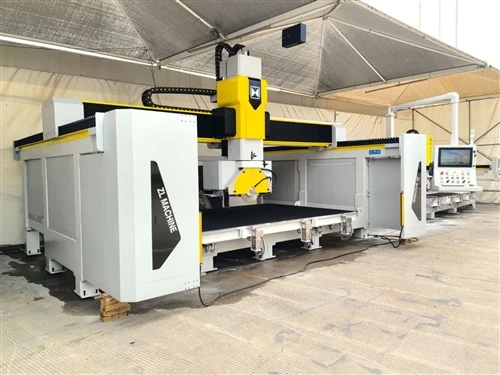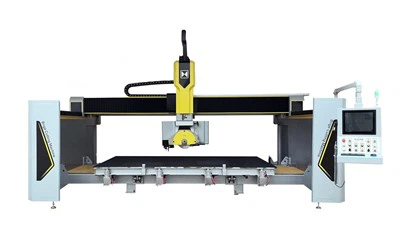
When it comes to cutting materials such as marble, granite, and other stones in the construction or stone - processing industry, a bridge cutter is an indispensable piece of equipment. One of the common questions that customers often ask is: What is the minimum cutting width of a bridge cutter? As a professional bridge cutter supplier, we're here to provide detailed insights on this topic.
Understanding Bridge Cutters
Bridge cutters are heavy - duty machines specifically designed for accurately cutting large stone slabs. They consist of a bridge structure that spans the working area, with a cutting head mounted on the bridge. This design allows for stable and precise movements in multiple directions, enabling different cutting operations.
The cutting width of a bridge cutter refers to the narrowest width of the cut that the machine can make on a stone slab. Multiple factors influence this minimum cutting width, including the design of the cutting head, the diameter and thickness of the saw blade, the accuracy of the machine's movement control system, and the type of material being cut.
Factors Affecting the Minimum Cutting Width
Saw Blade Specification
The saw blade is the most direct factor affecting the cutting width. The thickness of the saw blade plays a crucial role. Thinner saw blades can achieve narrower cuts. However, thinner blades also have limitations. They may be more prone to breakage or deflection, especially when cutting hard materials. For example, a traditional saw blade with a thickness of 2 - 3 mm can usually cut a relatively narrow strip of material, but the minimum cut width may be limited by the blade's stability during the cutting process.
Modern bridge cutters are often equipped with diamond - tipped saw blades. The manufacturing process of these blades allows for a certain degree of precision, enabling them to make cuts with a relatively consistent width. For instance, some high - end diamond saw blades with a thickness of 1.8 - 2 mm can potentially achieve a minimum cutting width of around 2 - 2.5 mm, provided that the machine's other components are well - coordinated.
Cutting Head Design
The design of the cutting head is another key factor. A well - designed cutting head can ensure that the saw blade is held firmly and cuts with high precision. Some advanced cutting heads have features such as adjustable depth and angle control, which can optimize the cutting process for different materials and requirements.
If the cutting head has a stable structure and accurate movement control, it can minimize any lateral movement of the saw blade during cutting. This stability is essential for achieving a narrow and consistent cutting width. For example, some cutting heads use advanced bearing systems and servo - motor - driven mechanisms to ensure smooth and precise movement, which helps in achieving a smaller minimum cutting width.
Material Characteristics
Different materials have different cutting properties. For relatively soft materials like limestone, the saw blade encounters less resistance during cutting. This allows for more precise control over the cutting process and potentially a narrower minimum cutting width.
On the other hand, hard materials such as granite can pose challenges. The hardness of granite can cause the saw blade to wear more quickly and may lead to more vibration during cutting. As a result, achieving a narrow cutting width on granite may be more difficult compared to softer stones. In general, the minimum cutting width for hard materials is usually larger than that for soft materials.
Machine's Movement Accuracy
The movement accuracy of the bridge cutter is also a significant factor. A machine with high - precision linear guides and an advanced control system can ensure that the saw blade moves precisely along the cutting path. Any inaccuracies in the movement can cause the saw blade to deviate from the intended cutting line, resulting in a wider than expected cut.
Modern bridge cutters are often equipped with CNC (Computer Numerical Control) systems. These systems provide precise control over the movement of the cutting head, allowing for highly accurate cuts. For example, a CNC - controlled bridge cutter can move the saw blade with an accuracy of up to ±0.1 mm, which is crucial for achieving a narrow minimum cutting width.
Typical Minimum Cutting Widths
Based on our experience as a bridge cutter supplier, the minimum cutting width of a general - purpose bridge cutter usually ranges from 2 mm to 4 mm. This range is suitable for most common stone - cutting applications in the construction and stone - processing industries.


For high - precision bridge cutters used in specialized applications, such as the production of high - end stone products or in the jewelry - making industry where extremely precise cuts are required, the minimum cutting width can be as low as 1.5 - 2 mm. However, these machines often come with a higher price tag due to their advanced technology and components.
Importance of Minimum Cutting Width
The minimum cutting width of a bridge cutter is of great importance in various applications. In the construction industry, narrow cuts are often necessary for creating precise joints between stone slabs, reducing waste, and improving the overall aesthetic appearance of the finished project.
In the stone - processing industry, a smaller cutting width means less material is wasted during the cutting process. This can significantly reduce production costs, especially when dealing with expensive stones such as marble. Moreover, it allows for more efficient use of raw materials, which is in line with the principles of sustainable development.
Our Bridge Cutter Solutions
As a leading bridge cutter supplier, we offer a wide range of bridge cutters to meet different customer needs. Our machines are designed with the latest technology and high - quality components to ensure high - precision cutting.
We have Best Marble Cutter that is suitable for both small - scale workshops and large - scale production facilities. This cutter is equipped with a high - performance saw blade and a stable cutting head, enabling it to achieve a minimum cutting width of around 2 mm.
Our Table Marble Cutting Machine is another popular option. It is designed for more precise and detailed cutting operations. With advanced CNC control, it can make cuts with high accuracy and a relatively narrow minimum cutting width.
For customers who require high - volume production and fully automated cutting processes, our Automatic Marble Cutting Machine is an ideal choice. This machine combines high - speed cutting with excellent precision, allowing for a minimum cutting width that meets most industrial requirements.
Conclusion
In summary, the minimum cutting width of a bridge cutter is influenced by multiple factors, including saw blade specification, cutting head design, material characteristics, and machine movement accuracy. The typical minimum cutting width ranges from 2 mm to 4 mm, but high - precision machines can achieve even narrower cuts.
As a professional bridge cutter supplier, we are committed to providing our customers with high - quality machines that can meet their specific cutting requirements. Whether you are a small - scale stone - processing workshop or a large - scale construction company, our bridge cutters can help you achieve efficient and precise cutting operations.
If you are interested in our bridge cutters or have any questions about the minimum cutting width or other technical details, please feel free to contact us for further discussion. We look forward to the opportunity to work with you and provide you with the best solutions for your stone - cutting needs.
References
- Stone Cutting Machinery Handbook, published by a leading industry press.
- Research papers on advanced stone - cutting technologies from international academic journals.